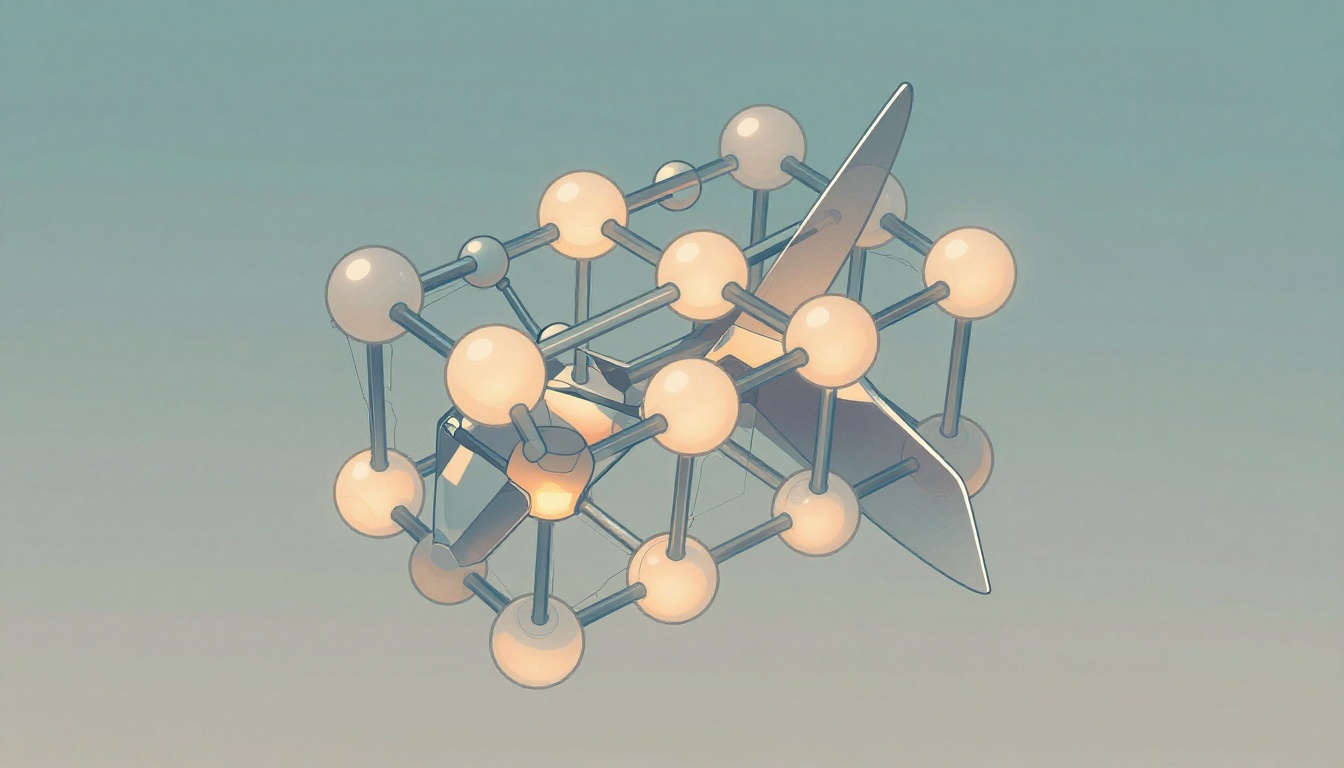
Picture a stack of oranges piled high in a neat pyramid. Each fruit fits snugly against its neighbors. Now add a bump here or a missing orange there. The pile wobbles less under pressure. That’s how crystal lattice defects work in materials. Atoms form a repeating three-dimensional grid, much like that pyramid. This grid gives metals, ceramics, and gems their basic structure.
Perfect crystals sound ideal. Yet they break easily. Real materials have imperfections. These defects block cracks and boost toughness. You see it in everything from knives to airplane wings. Engineers now design them on purpose.
This post breaks it down. First, we look at crystal lattices and common defects. Next, we cover the science of how they add strength. Then, real-world examples show the impact. Finally, we peek at future designs. Defects turn flaws into features.
Picture Perfect Crystals Meet Real-Life Bumps
Atoms in a crystal lock into a tidy grid. Think of it as a vast Lego wall built block by block. Each atom bonds to six or twelve neighbors in metals or salts. This order creates shine, cleavage, and hardness in gems like diamond.
Perfect crystals stay rare. Growth happens fast in nature or labs. Cooling metal from molten state rushes atoms into place. Stress during use adds more chaos. Defects pop up everywhere. They form because atoms jostle for spots. High temperatures shake the grid loose. Radiation or chemicals squeeze extras in.
These bumps aren’t random damage. They act as anchors. A flawless grid slips smoothly under force. One push, and it shatters. Defects snag that motion. Materials last longer as a result.
The Myth of the Flawless Crystal
Theory loves perfect crystals. Models show atoms in endless repeat. Such grids feel brittle. Force shears planes of atoms clean apart. Pure copper proves it. Lab-grown single crystals bend soft like putty.
Real crystals carry defects from the start. Manufacturers cool alloys unevenly on purpose. Use adds more through wear. Perfect ones fail fast. Everyday metals endure because of those “flaws.” Copper hardens when you hammer it flat. Strength jumps from defects piling up.
This shift excites engineers. They chase controlled chaos over purity.
Spotting the Usual Suspects: Key Defect Types
Vacancies leave empty atom spots. Heat shakes atoms loose, creating holes. Interstitials cram extra atoms into tight gaps. Small ones like carbon fit between iron atoms.
Dislocations run as line defects. They look like edges in stacked decks of cards. Slip happens along these lines under stress. Grain boundaries join crystal chunks. Mismatched orientations form walls between them.
Each type plays a role. Vacancies pin dislocations in place. Boundaries slow crack growth. Engineers mix them for peak performance. No single defect rules alone.
Unlocking Strength: The Science Behind Defect Power
Defects stop atoms from sliding too easily. Pure crystals deform by whole planes shifting. That’s weak. Dislocations let single lines slip instead. But they tangle fast. Strength builds as they block each other.
Work hardening shows this in action. Bend a paperclip back and forth. It resists more each time. Dislocations multiply and jam. Metal gets tougher until it snaps.
Alloys add solute atoms. They distort the grid around them. Nearby dislocations curve and slow. Precipitation hardening goes further. Heat treatments cluster atoms into tiny barriers. Dislocations climb over or cut through them. Each path costs energy.
Grain boundaries fit the Hall-Petch effect. Smaller grains mean shorter slip distances. Strength rises as boundaries multiply. However, too small leads to brittle failure. Balance stays key.
These tricks multiply force needed for deformation. Materials hold up under load.
Tangled Dislocations: Nature’s Way to Toughen Up
Dislocations glide on slip planes. One moves easy at first. Stress multiplies them. They bump and form locks.
Picture kids crowding a slide. First child zooms down. Others pile up behind. Traffic halts. Hammer cold steel, and dislocations tangle. Tensile strength doubles or triples.
Cotter pins in bridges work this way. Repeated loads harden them over time. Drivers pass safely because defects fight back.
Alloying and Precipitates: Custom Roadblocks for Atoms
Solute atoms strain the lattice. Big ones like nickel in iron bow slip planes. Dislocations hesitate.
Precipitates form during aging. Solutes clump into nanoparticles. They dot the grid like gravel in road tar. Dislocations bow around clusters or shear them apart.
Aluminum alloys use this. Bake at low heat after solution treatment. Strength soars without much weight gain. Planes fly lighter as a result.
From Kitchen Knives to Jet Engines: Defects in Action
Stainless steel blades stay sharp longer. Chromium forms precipitates that pin dislocations. Carbon steel tools harden through work. Blacksmiths hammer them, building tangled lines.
High-strength low-alloy steels build cars and bridges. Niobium adds fine grains. They carry heavy traffic year after year.
Aluminum alloys power bikes and planes. Pure aluminum yields at 50 MPa. Add magnesium and age it right. Strength hits 500 MPa. Wings flex but don’t fail.
Titanium rules implants. Vanadium defects make it biocompatible and tough. Patients walk without pain.
Superalloys coat turbine blades. Nickel base with rhenium precipitates shrugs off 1,000°C heat. Jets scream overhead thanks to defect design.
Everyday Heroes: Strengthened Steels and Tools
Kitchen knives slice tomatoes clean. Work hardening from sharpening keeps edges keen. Alloy steels in wrenches take torque. They snap less than pure iron.
Cars roll on lighter frames. Dual-phase steels mix soft ferrite with hard martensite grains. Crumple zones absorb crashes. Drivers survive.
High-Tech Wins in Aerospace and Medicine
Aircraft skins bend in turbulence. 7075 aluminum laughs it off. Precipitation clusters hold it together.
Turbine blades spin at 10,000 rpm. Defects lock creep in place. Fuel burns efficient.
Implants fuse bone. Titanium’s defects match body loads. Rejection drops low.
Crafting Tomorrow’s Materials with Smart Defects
Engineers tune defects precisely. Heat treatments control precipitate size. Alloy recipes pick solute mixes.
3D printing layers crystals with built-in boundaries. Nanomaterials shrink grains to atomic scales. Strength peaks there.
Challenges linger. Overdo it, and brittleness creeps in. Balance ductility with power.
By April 2026, AI models predict defect patterns. Labs design sustainable alloys from recycled scrap. Phones get thinner cases. Electric vehicles shed weight for range.
Watch this space. Your next tool or ride benefits soon.
Defects flip the script on weakness. Dislocations tangle for work hardening. Precipitates and solutes block slip. Everyday steels and high-tech alloys prove it.
That orange stack stands firm with bumps. Materials do the same. Planes soar safer. Tools last longer. Flaws fuel progress.
Share your toughest gear in comments. What holds up best? Subscribe for more material science breakdowns. How might defects shape your world next?