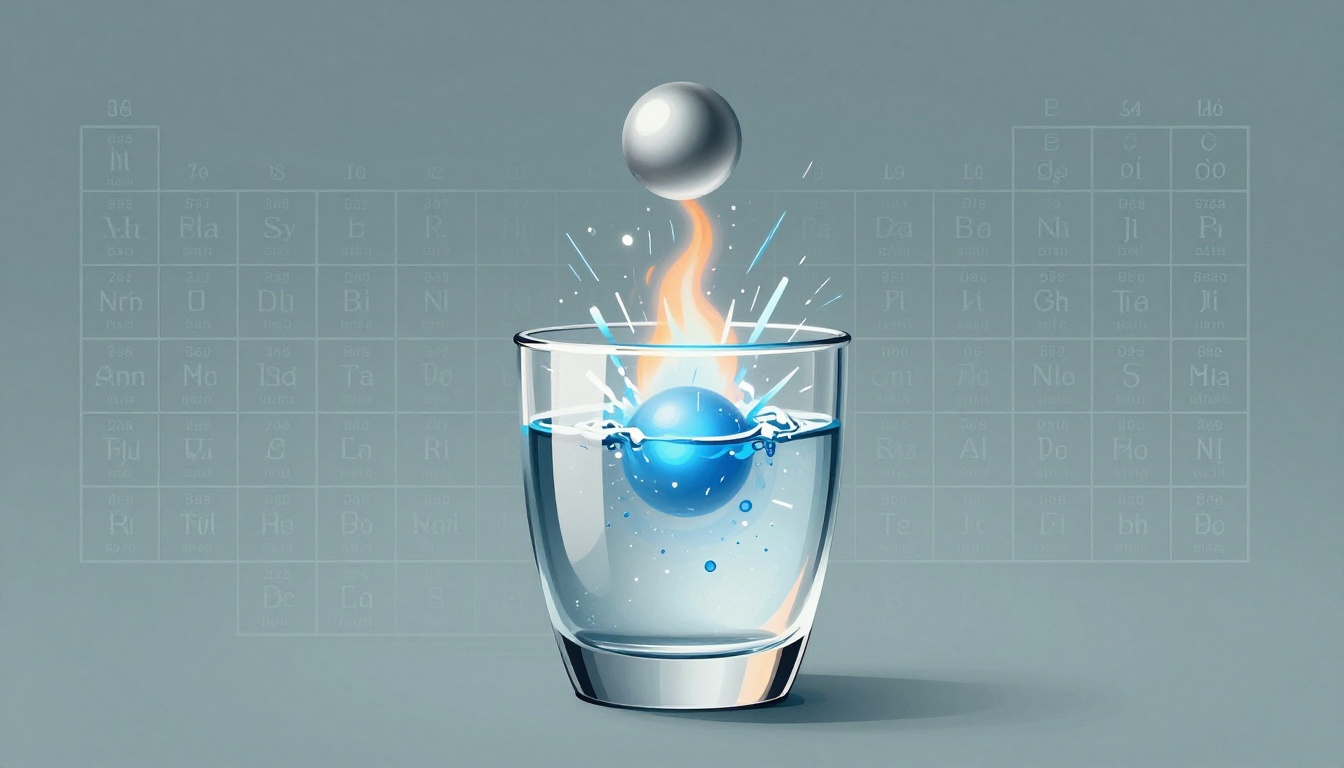
Imagine dropping a chunk of sodium into a glass of water. It skitters across the surface, then bursts into a frenzy of sparks, flames, and hydrogen gas. That’s the wild side of elemental reactivity on full display.
You’ve probably wondered why some elements explode on contact while others sit quietly forever. Elemental reactivity boils down to how easily an element forms chemical bonds or reacts with other substances. The good news? You don’t need to memorize quirks for all 118 elements.
Enter the periodic table, your ultimate cheat sheet. This grid arranges elements by atomic number, revealing clear patterns in reactivity. Groups (the columns) show families with similar behaviors; for example, alkali metals in Group 1 react fiercely because they eagerly lose electrons.
Periods (the rows) tell another story. Reactivity shifts predictably from left to right: metals on the left give up electrons fast, while nonmetals on the right grab them hungrily. These trends mean you can glance at any element’s spot and forecast its action.
Noble gases hug the right edge in Group 18, inert because full electron shells make them stable. Halogens in Group 17 crave one electron, so they snatch it from almost anything nearby. Spot those positions, and prediction becomes second nature.
In short, the periodic table turns guesswork into science. You’ll walk away knowing how to predict reactivity for metals, nonmetals, or anything in between, just by its place on the chart. Ready to master it? Let’s break down the trends step by step.
Master the Periodic Table’s Layout to Spot Reactivity Clues
You can predict reactivity fast once you grasp the periodic table’s layout. Periods run horizontally as rows. They fill energy levels from left to right. Groups stand as vertical columns. Elements in the same group share traits because they hold the same number of valence electrons, the outer ones that drive reactions.
Metals dominate the left side. They lose electrons easily. Nonmetals cluster on the right. They gain electrons with force. Metalloids form a stair-step line in between. They mix metallic and nonmetallic behaviors. The table splits into blocks too: s-block on the left (groups 1-2), p-block on the right (13-18), d-block in the middle (transition metals), and f-block at the bottom (lanthanides and actinides). These spots reveal reactivity patterns right away.
Picture the layout like this simple sketch:
1  2          13 14 15 16 17 18
H  |    |     |  |  |  |  |  | He
Li Be    |     B  C  N  O  F  Ne
Na Mg    |  d-block  |  |  |  |  | Ar
K  Ca  Sc...Zn Al Si P  S  Cl Ar
Groups keep reactivity steady and similar. Periods shift it predictably. Now let’s zoom in.
Why Groups Act Like Families with Shared Reactivity Habits
Groups act like families. Members share reactivity habits from matching valence electrons. Atomic size grows down each group. That changes how they react.
For metals, bigger atoms lose electrons easier. Reactivity climbs down the group. Take Group 1 alkali metals:
- Lithium reacts with water but stays mild.
- Sodium fizzes and sparks.
- Cesium explodes on contact.
Group 2 alkaline earth metals react less because they lose two electrons. Still, magnesium burns bright, while barium dives into stronger reactions lower down.
Nonmetals flip the script. Smaller atoms at the top pull electrons harder. Group 17 halogens grab one electron fiercely:
- Fluorine attacks almost anything.
- Chlorine disinfects pools.
- Iodine stains less aggressively.
Group 18 noble gases sit inert. Full shells mean no need to react. Helium floats balloons. Neon lights signs. They ignore the family drama.
In short, scan the group number and row position. You spot if it’s eager to give, take, or chill.
How Periods Reveal Shifts from Calm Metals to Feisty Nonmetals
Periods show reactivity flip across rows. From left to right, atomic radius shrinks. Protons pull electrons closer. Ionization energy rises, so losing electrons gets tougher. Electronegativity climbs too. Grabbing electrons turns easier.
Metals start calm and reactive on the left. They shed electrons quick. As you move right, reactivity drops. Sodium in period 3 blasts with water. But aluminum resists more.
Nonmetals pick up steam toward the right. They hoard electrons. Chlorine in the same period bonds fast with sodium to form salt. Argon ends inert.
For example, compare period 3: Na sparks wildly. Silicon sits stable. Phosphorus ignites in air. Sulfur burns yellow. Chlorine hisses green gas.
These shifts happen every period. You forecast behavior just by crossing left to right. Metals fade out. Nonmetals heat up.
Track Down-Group Trends to Predict Metal and Nonmetal Fireworks
Groups run tall on the periodic table. They reveal fireworks as you track down from top to bottom. Metals in Groups 1 and 2 spark bigger reactions lower down because their atoms grow larger. Valence electrons drift farther from the nucleus. That weak grip lets them escape easily. Nonmetals reverse the pattern. Reactivity fades as size increases. You predict these shifts with simple rules on atomic size and electron pull.
Alkali and Alkaline Earth Metals Ramp Up Reactivity as You Go Down
Start with Group 1 alkali metals. Lithium sits tame at the top. It reacts with water but fizzles mildly. Sodium dances and sparks next. Potassium bursts louder. Rubidium and cesium explode on contact with water. They shoot flames and hydrogen gas high.
Why the ramp up? Atoms enlarge down the group. Valence electrons sit farther out. The nucleus pulls less hard because inner electrons shield them. This shielding effect blocks full nuclear charge. So effective nuclear charge drops. Ionization energy falls too. Electrons pop off with less push.
Group 2 alkaline earth metals follow suit but milder. They lose two electrons. Beryllium barely reacts. Magnesium burns bright in air. Calcium fizzes in water. Strontium and barium react vigorous. Barium foams wild with acids.
Compare them side by side:
| Element | Group 1 Example | Reaction with Water | Group 2 Example | Reaction with Water |
|---|---|---|---|---|
| Top | Lithium (Li) | Mild fizz | Magnesium (Mg) | Slow, needs heat |
| Middle | Potassium (K) | Violent pop | Calcium (Ca) | Steady bubbling |
| Bottom | Cesium (Cs) | Massive explosion | Barium (Ba) | Fast, hot foam |
Potassium outreacts sodium because its extra size weakens the hold. You spot cesium’s fury just by its low spot. Transition metals in between groups show less clear trends. They often peak mid-group. But stick to Groups 1 and 2 for sharp predictions.
Halogens Lose Their Edge Down the Group
Halogens in Group 17 flip the trend. Fluorine rules as the most reactive nonmetal. It attacks glass and displaces every other halogen. Chlorine bubbles green and bleaches fierce. Bromine stains brown but milder. Iodine shifts to gentle tinctures.
Larger atoms down the group hold valence electrons loosely. The nucleus tugs weaker from afar. Electronegativity drops. They grab electrons less tight from others. So fluorine snatches chloride from salts. But iodine won’t budge bromine.
For example, chlorine displaces bromide from seawater. Yet bromine skips iodide. Size grows. Attraction fades. Effective nuclear charge rises less for outer shells because shielding helps inner ones more.
In short, top halogens ignite fast. Bottom ones simmer. Scan the row number. You forecast if fluorine bites or iodine whispers. These down-group shifts nail metal fireworks and nonmetal sparks every time.
Scan Across Periods to Forecast Reactivity Swings
Periods stretch across the periodic table like rows in a grid. Reactivity swings wildly from left to right in each one. Metallic traits fade as you move right. Nonmetallic ones rise fast. Ionization energy climbs because protons pack electrons tighter. Metals lose their eagerness to react. Electronegativity grows too. Nonmetals pull electrons harder from others. You spot these shifts in any period. For example, period 3 shows the pattern clear. Sodium blasts acids. Chlorine bubbles fierce. In between, reactivity drops then spikes.
This lets you predict single displacement reactions. A left-side metal swaps places with a right-side one in compounds. Sodium kicks copper from solutions. But copper ignores sodium salts. Scan positions. You know who wins.
Metallic Reactivity Fades as You Head Right
Metals pack the left of each period. They react strong at first. Sodium in period 3 explodes with acids. It spits hydrogen gas quick. Magnesium follows. It dissolves well in acids too. Bubbles form steady.
Aluminum shifts next. It acts amphoteric. That means it fights acids and bases both. With acid, it sheds oxide layer and reacts. Bases dissolve it same way. Reactivity dips because higher ionization energy holds electrons tight.
Silicon sits metalloid after that. It stays mostly inert. Won’t budge much. Then phosphorus turns full nonmetal. No metal left.
Here’s period 3 metals summed up:
| Element | Position | Reactivity Note |
|---|---|---|
| Na | Far left | Explodes with acids |
| Mg | Left | Good acid reactor |
| Al | Middle | Amphoteric, dual threat |
| Si | Edge | Mostly stable |
Size shrinks rightward. Pull strengthens. Metals calm down. You forecast easy now.
Nonmetals Ignite Reactivity on the Far Right
Nonmetals crowd the right edge. They grab electrons hungry. Oxygen bonds metals to oxides. Fluorine strips electrons from anything. Chlorine bubbles furious with metals. It forms salts instant.
These snatch predictably. Fluorine displaces chloride easy. Chlorine bumps bromide. Patterns hold across periods. Higher electronegativity drives it. They crave full shells.
Take single displacement again. Chlorine turns bromide salts to bromides. Metals lose out. Oxygen rusts iron slow.
Diagonal relationships add twists. Lithium acts like magnesium sometimes. Beryllium mirrors aluminum. Size and charge match across periods. But main trend rules: right side rules reactions.
In short, cross periods left to right. Metals quiet. Nonmetals roar. Your predictions sharpen.
Test Your Skills: Predict Reactions Using Periodic Patterns
Ready to put these trends to work? Grab your periodic table now. We’ll apply group and period clues to predict real reactions. First, consider everyday items. Then tackle challenges. You’ll see patterns snap into place.
Everyday Examples Like Batteries and Bleach
Think about lithium-ion batteries in your phone. Lithium sits at the top of Group 1. Smaller size means tighter electron hold. So it reacts milder than sodium or potassium below it. That’s why engineers pick it. Controlled reactivity powers devices safely without explosions.
Chlorine tells another story. Pools stay clean because chlorine from bleach grabs electrons fast. As a Group 17 halogen high in period 3, it outmuscles bromide or iodide easily. Yet fluorine above it reacts even fiercer. These spots explain why chlorine disinfects water so well.
Now test yourself with scenarios. Use positions to predict. Compare groups first, then periods.
- Will zinc displace copper from CuSO4 solution? Zinc lives in Group 12, period 4. Copper sits in Group 11, same period. Transition metals peak reactivity mid-group often. Zinc reacts stronger with acids than copper. So yes, zinc bumps copper out. Bubbles form as ZnSO4 takes over.
- Does bromine react with NaCl? Bromine ranks in Group 17, period 4. Chlorine holds period 3 spot, same group. Halogens grow less reactive down the group. Chlorine grabs tighter. No reaction happens. Bromine can’t steal from NaCl.
- Can magnesium kick calcium from CaCl2? Magnesium occupies Group 2, period 3. Calcium follows in period 4. Both lose two electrons. But magnesium sits higher, so smaller and less reactive down the group. No, calcium stays put.
- Will potassium replace sodium in NaOH? Potassium claims Group 1, period 4. Sodium holds period 3. Alkali metals ramp up down the group. Larger potassium loses electrons easier. Yes, it displaces sodium quick.
- Does iodine displace chlorine from NaCl? Iodine drops to period 5 in Group 17. Chlorine stays period 3. Size favors top halogens. No way. Iodine lacks the pull.
How’d you score? Check groups for family habits. Periods show left-right shifts. These match trends we covered.
Pro tip: Always check valence electrons and atomic size first. They drive every prediction. Practice more, and you’ll spot reactions anywhere.
Conclusion
Position rules reactivity on the periodic table. Metals grow more reactive down their groups because larger atoms release electrons with less effort. Halogens lose steam downward; bigger size softens their electron grab.
Periods flip the script left to right. Strong metals on the left fade as you cross. Nonmetals ignite on the right because they hoard electrons fiercely.
These patterns match the sodium frenzy from our start. Now you predict any reaction with one quick scan.
Print a periodic table for your desk today. Test it on real examples like battery power or pool bleach. Explore specific reactions next, such as transition metal quirks.
Share a bold prediction in the comments. Which element’s spot fools you most? Your turn to master the table.